
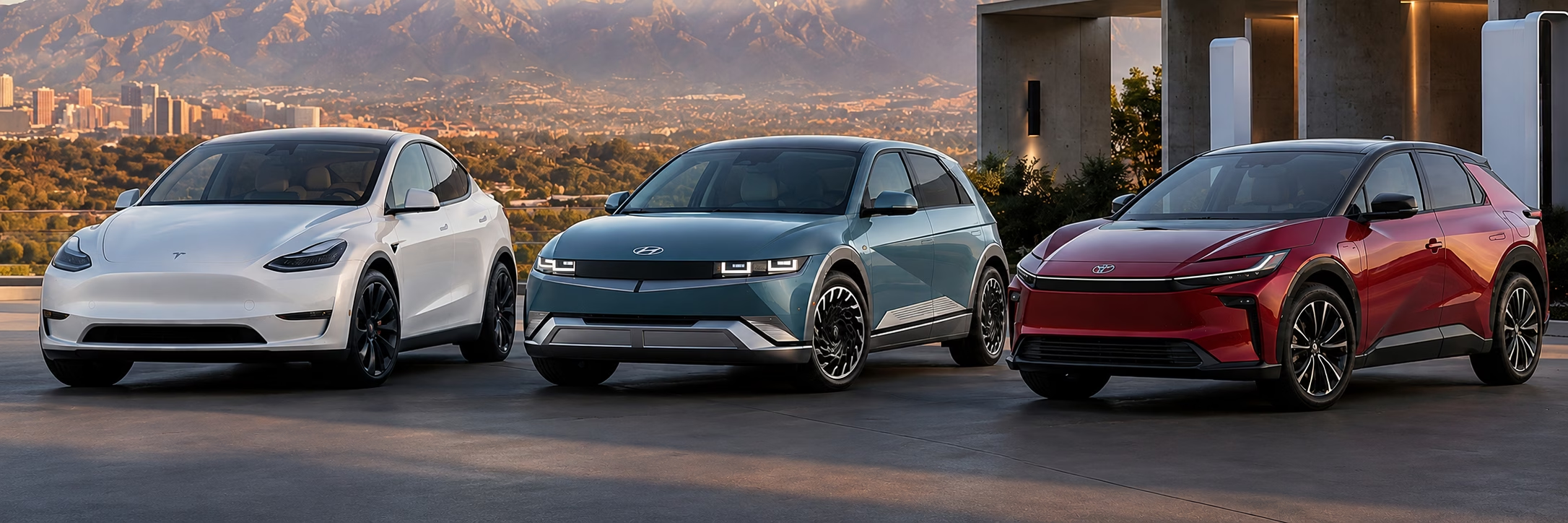
Used EVs: Where Rebuilders Should Buy & Where to Be Cautious
A major wave of off-lease electric vehicles is beginning to reach the used market. For Rebuilders, that creates opportunity – along with a greater risk of depreciation.
Our position is simple: keep buying EVs, but buy selectively. The best opportunities are likely to be proven, affordable models purchased at values that account for increasing supply. High-dollar, rapidly aging, and incentive-sensitive EVs require much more caution.
More Off-Lease EVs Are Coming
EV leasing expanded rapidly from 2023 through 2025, helped by federal incentives and heavily subsidized lease payments. Many of those vehicles are now beginning to return to the wholesale market.
Industry projections indicate that EV lease returns could rise by approximately 230% during 2026, with even more volume expected in 2027. Deloitte projects that EVs will represent nearly 10% of all lease maturities in 2026 and approximately 25% by 2028.
Models likely to appear in greater numbers include:
- Tesla Model 3 and Model Y
- Ford Mustang Mach-E
- Hyundai Ioniq 5
- Kia EV6
- Volkswagen ID.4
- Chevrolet Bolt EV and Bolt EUV
- Nissan Ariya
- Luxury EVs from Mercedes-Benz, BMW, Audi, Genesis, and Volvo
As more similar units reach the market at the same time, the details will matter. Mileage, battery condition, charging performance, equipment, and local demand may create a meaningful difference between two otherwise similar vehicles.
EV Values Are Splitting Into Two Markets
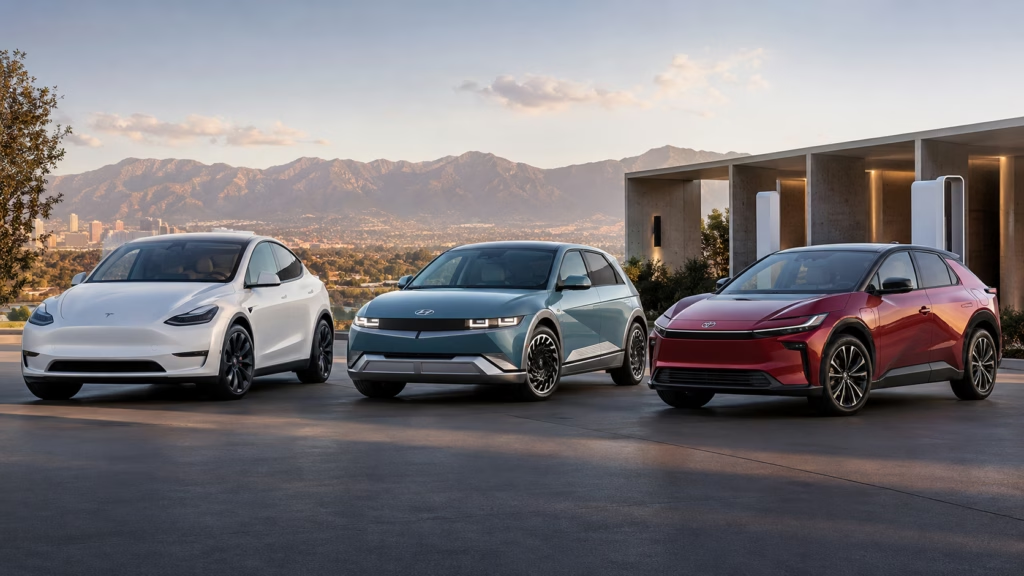
Used EV prices are not moving in one direction across every price band.
During the first half of 2026, demand strengthened for affordable used EVs. Recurrent reported that comparable used-EV prices increased about 5.1% from January through June. Vehicles priced below $20,000 increased about 9.4%, while those priced above $40,000 were flat or declined. Several mainstream models – including the Chevrolet Bolt, Tesla Model 3, and Ford Mustang Mach-E – recorded double-digit increases during that period.
That points to two distinct categories:
Affordable, mainstream EVs can attract strong demand when they offer useful range, acceptable battery health, competitive charging, and a compelling retail payment.
Higher-priced and luxury EVs remain more vulnerable to rapid depreciation, expensive repairs, technology obsolescence, and aggressive incentives on new models.
The original MSRP is becoming less relevant. A dramatic discount from the sticker price does not automatically make a used EV a good value.
What Could Support Used-EV Demand?
Several factors could strengthen demand over the next six to twelve months:
- More affordable two- and three-year-old EVs entering the market
- Higher or volatile gasoline prices
- Additional state and local incentives
- Expanded public and home-charging infrastructure
- Lower used-vehicle financing rates
- Better consumer understanding of battery health
- Transferable manufacturer battery warranties
- Strong demand for vehicles priced below approximately $25,000
- Growth in metro markets with predictable commutes and access to home charging
More than half of used-EV inventory was priced below $30,000 during 2026. That gives buyers a broader entry point than the market offered in previous years.
What Could Push Values Lower?
The largest risk is simple: supply could grow faster than retail demand.
Other pressures include:
- Large rebates or subsidized leases on new EVs
- Major improvements in range, batteries, or charging speed
- Manufacturer price reductions that immediately reset used values
- Stronger consumer demand for hybrids
- High insurance premiums and collision-repair costs
- Limited parts availability
- Uncertainty about battery condition or degradation
- Poor cold-weather range
- Slow DC fast charging
- Outdated charging standards or software
- High interest rates and restrictive lending
- Rental- or commercial-fleet liquidations
Federal clean-vehicle credits are also no longer available for vehicles acquired after September 30, 2025. Buyers cannot rely on the former federal used-EV credit to offset an aggressive retail price, and manufacturers have less federal support for deeply subsidized leases.
When to Buy More Aggressively
An EV may deserve a stronger bid when:
- It can retail below approximately $20,000 to $25,000.
- The acquisition price reflects conservative future value, not historical residuals.
- The model has established demand in the intended sales market.
- Battery condition and usable range can be independently verified.
- DC fast-charging performance remains competitive.
- The remaining battery warranty is clearly transferable.
- Similar local inventory is limited.
- Insurance, repair, and parts costs are manageable.
- Expected retail turn is short.
- The purchase leaves enough margin for additional depreciation.
Affordable Chevrolet Bolt models, selected Tesla Model 3 configurations, and other mainstream EVs can present good opportunities when the acquisition cost supports a compelling customer payment.
When to Buy More Cautiously
Use a more conservative value when:
- The expected retail price is above $35,000 to $40,000.
- The vehicle competes with a heavily incentivized new EV.
- The manufacturer has a history of reducing new-vehicle prices.
- Charging is slow or real-world range is limited.
- Battery condition cannot be verified.
- The vehicle has accident, flood, or underbody battery damage.
- Battery replacement or structural repair costs are uncertain.
- Dealer, parts, or software support is weak.
- Multiple identical units are already available locally.
- The model is entering a large lease-return cycle.
- It is a luxury EV with a high original MSRP but limited used-buyer demand.
High-dollar luxury EVs deserve particular caution. Their original sticker prices often say very little about their future wholesale or retail value.
The Bottom Line: Practice Selective Aggression
Used-EV supply should continue to rise through the remainder of 2026 and accelerate in 2027. Demand is likely to remain strongest in affordable price bands, while premium and luxury EVs face greater depreciation exposure.
The incoming lease-return wave may create brief wholesale opportunities, especially when several similar vehicles enter an auction or market at once. Success will depend on discipline:
- Be aggressive on proven, affordable models bought at conservative values.
- Be cautious with high-dollar, slow-charging, or rapidly aging technology.
- Control the number of similar units in inventory.
- Focus on battery condition, retail payment, and expected turn time.
- Adjust values quickly as lease-return volume changes.
AutoSavvy remains interested in EV inventory. We encourage Rebuilders to continue submitting opportunities – but strong EV purchases must be based on current retail demand and forward-looking values, not original MSRP, outdated residual forecasts, or historical auction results.
Contact AutoSavvy to discuss current EV opportunities.
Happy Rebuilding!
Sources
- Cox Automotive: EV Market Monitor – June 2026
- Deloitte: The looming spike in electric vehicle lease returns
- IRS: Clean vehicle tax credits
- NHTSA: Corporate Average Fuel Economy standards
- PwC: Automotive industry outlook 2026
- Recurrent: Used electric car prices and market report – Q3 2026
- U.S. EPA: Final rule on greenhouse-gas standards